Idaho outages caused by winter weather, summer demand, equipment failures, or downed lines can last long enough to disrupt refrigeration, heating, cooling, pumps, medical equipment, and home businesses. A standby generator can restore essential power automatically.
What is a standby generator?
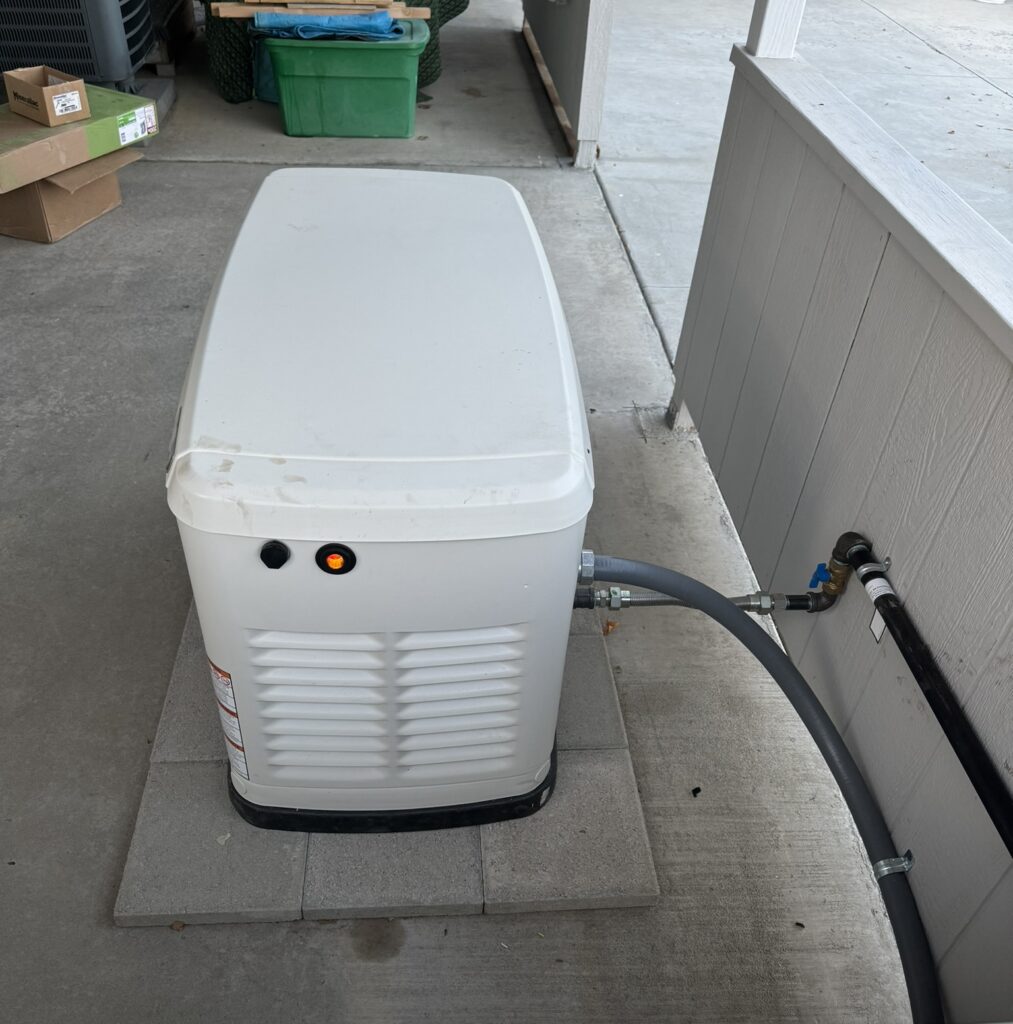
Unlike a portable generator that must be positioned, fueled, and started, a standby generator is permanently installed outside and connects through approved transfer equipment. It can start automatically when utility power fails.
- Lights and selected outlets
- Heating and cooling
- Refrigerators and freezers
- Medical equipment
- Well and sump pumps
Why Idaho homeowners consider backup power
- Comfort and safety during winter outages
- Protection for frozen pipes and refrigerated food
- Continuity for medical needs and home businesses
- Automatic operation when nobody is home
What installation involves
A safe system requires load calculations, generator sizing, an approved transfer switch, proper placement, fuel coordination, permits, and inspection. Generator size is based on the equipment you want to operate—not simply the square footage of the home.
What affects the cost?
- Generator size and brand
- Distance from the panel to the unit
- Natural-gas or propane coordination
- Transfer equipment and panel condition
- Site work, permits, and local requirements