
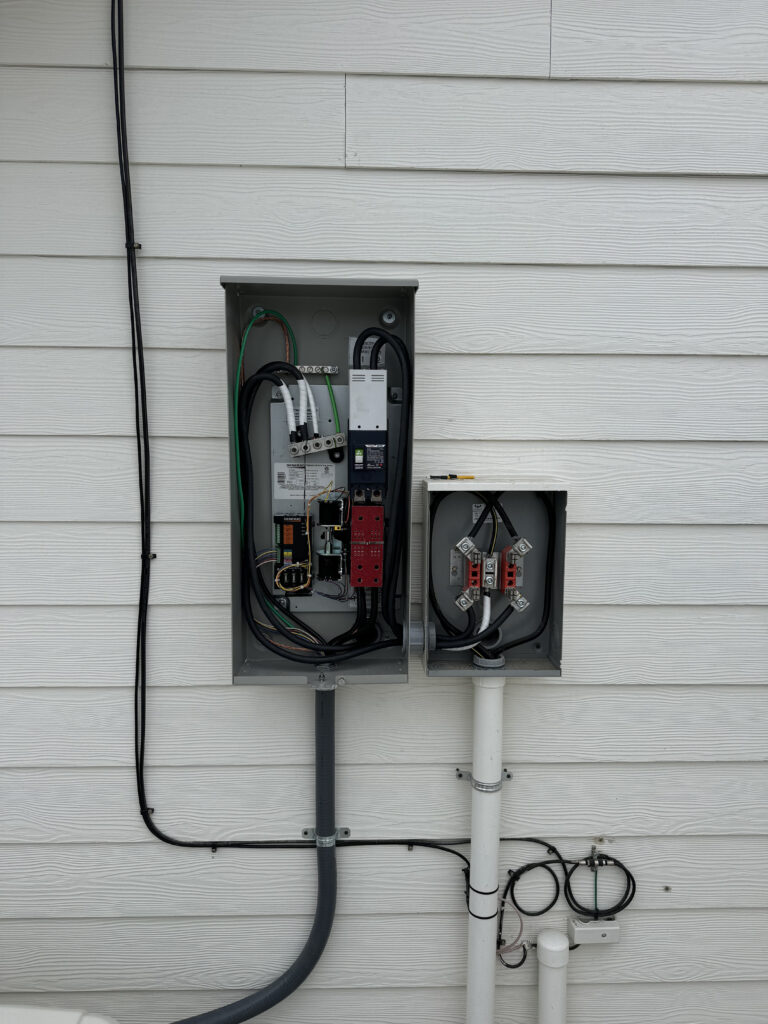
A circuit breaker that trips is interrupting power because the circuit has detected a condition it is designed to respond to. One trip may follow an obvious overload. A breaker that trips repeatedly, immediately, or with very little connected can point to a problem that needs professional diagnosis rather than another reset.
What a tripped breaker is doing
Standard circuit breakers are designed to interrupt current when a circuit is overloaded or shorted, helping protect the wiring from excessive current. AFCI and GFCI devices respond to additional hazards, including certain arcing and ground-fault conditions. A trip is a safety response, not a nuisance to defeat.
Start by reducing the electrical load
If there is no smoke, heat, burning odor, buzzing, or visible damage, turn off and unplug the equipment on the affected circuit before attempting a single reset. Reset the breaker according to the panel manufacturer's instructions, then reconnect only the equipment you need. If it trips again, leave it off and arrange an electrical evaluation.
- Do not keep resetting a breaker that will not stay on.
- Do not hold a breaker in the ON position.
- Do not replace it with a higher-amperage breaker.
- Keep the panel accessible, dry, and free of stored items.
- Never remove the panel cover unless you are qualified to work inside it.
Too much equipment may be using one circuit
An overload can occur when the combined demand of appliances, heaters, tools, or electronics exceeds what the circuit can safely supply. The Electrical Safety Foundation International lists frequent breaker trips, dimming lights, warm or discolored wall plates, buzzing, and burning odors among warning signs of an overloaded electrical system. A power strip adds receptacles, but it does not add circuit capacity.
A specific appliance may be the problem
If the breaker trips whenever one appliance is used, stop using and unplug that appliance. The U.S. Consumer Product Safety Commission advises having an appliance repaired or replaced when it repeatedly trips a breaker or blows a fuse. Moving it to another circuit can transfer the hazard rather than solve it.
Repeated or immediate trips need diagnosis
A breaker that trips with little connected, trips immediately after reset, or affects a circuit that previously worked normally may indicate damaged wiring, a loose connection, a short circuit, a ground fault, an arc fault, or a problem with the breaker itself. The trip pattern alone does not identify the cause. An electrician can test the circuit, devices, connections, and breaker without guessing.
Know when to leave the circuit off
Leave the breaker off and call an electrician if you notice a hot or discolored panel, outlet, or switch; crackling or buzzing; a burning odor; sparks; shocks or tingling; water near electrical equipment; or repeated trips. If there is smoke or an active fire, leave the home and call 911. Do not touch a wet panel or electrical device.
The long-term fix depends on the cause
The right repair may be as focused as replacing a damaged receptacle or appliance, or it may require correcting wiring, replacing a faulty breaker, or adding a properly designed circuit for a heavy load. A larger breaker is not a substitute for correctly sized wiring. The electrician should determine the cause before recommending a repair.
Permits and electrical work in Idaho
Idaho's Division of Occupational and Professional Licenses says electrical work requires permits and notes that some cities and counties administer their own programs. The applicable permit and inspection process depends on the work and jurisdiction. Walker Electric can evaluate a tripping circuit and explain the appropriate next steps for your Treasure Valley home.